
We’re still building this page brick by brick. Stay tuned for the grand reveal!
Stakeholder engagement is a definitive factor in the success of any nature-based solution (NBS). In the City Blues project, we have found that engagement is most effective when it is regarded as a core design requirement rather than an administrative supplement.
To make NBS projects work, municipalities could balance two tracks: build community trust through social stewardship and ensure technical reliability through professional governance.
A lifecycle approach to participation
Engagement is a continuous process that evolves across the project lifecycle. Our research shows that practitioner knowledge is currently strongest in the early stages, but high-impact opportunities exist throughout the entire life of a project.
Planning: Involving stakeholders early is a proven cost-saving measure. It identifies potential barriers before significant resources are committed, reducing the need for expensive design changes later.
Design: Co-creation methods (physical models or workshops) bridge the gap between technical requirements and community needs. This is the best time to build a sense of ownership.
Construction: Proactive communication about noise, dust, and timelines prevents minor disruptions from turning into formal complaints.
Operation and maintenance: This is a critical transition point. Participation often drops off after construction, but long-term success depends on shared stewardship: clear settlements on who cleans the ditches, who waters the trees, and who reports problems.
Monitoring: Since stormwater benefits are often invisible when the system is working perfectly, monitoring is the time to make those benefits tangible through signage, drone demonstrations, and citizen science.
Renewal and repurposing: Cities should consider the end-of-life of an NBS to ensure long-term sustainability and community readiness for future changes.
Stakeholder mapping
There are several different stakeholder groups that can have interest and influence in NBS. What groups are identified important depend on the context, but usually, for instance, local residents, companys, associations and house owners, municipality units/personnel, construction companys, NGOs and media can be important.
-
 Stakeholder Engagement Framework ReportOpen Clicking the link will download file Stakeholder Engagement Framework Reportpdf 606.13 KBOpen Clicking the link will download file Stakeholder Engagement Framework Report
This document is an introductory guide for municipal practitioners working on nature-based stormwater solutions. It sets out a framework for thinking about stakeholder engagement across the full project lifecycle and is intended to be read alongside the City Blues case examples and workshop materials.
5 overall recommendations for stakeholder engagement
- Start earlier than feels necessary. Talk to people before the design is locked in. Early involvement is about efficiency. It ensures the NBS reflects local needs and prevents technical dead ends that are costly to fix later.
- Make the invisible visible. Stormwater management is often hidden infrastructure. Use on-site signage, digital nature scoreboards, or drone footage to show the public how a rain garden or wetland is protecting their neighbourhood. If people can’t see the benefit, they won’t value the asset.
- Combine community trust with technical quality. No single approach is enough. You need community-focused methods (volunteer planting) to build pride, but you also need technical-institutional methods (clear contracts with utilities and landowners) to ensure performance.
- Move toward genuine empowerment. Participation should aim for more than just informing the public. Explore ways to give stakeholders real agency, such as providing financial incentives for private landowners to install NBS or supporting events in which residents lead monitoring of local biodiversity.
- Prevent the post-construction drop-off. Establish maintenance and monitoring partnerships before the construction crew leaves the site. The city and the community share responsibility for the ongoing care of the NBS; shared responsibility is the key to a water-sensitive and resilient city.
Stakeholder engagement case examples
What are some concrete examples how cities can engage stakeholders in implementing NBS?
-
Local residents, houseowners associations, developers and NGOs were involved in stream restoration by distributing stones, gravel and dead wood to create habitats for fish and invertebrates. These stakeholders were identified important because they had shown interest in the specific area.
The reason to engage them was to create ownership of the NBS and educate local people to understand the challenges and the solutions provided. Contact was made through local houseowners associations, social media posts and posters in local supermarkets and community houses etc.
-
City of Malmö invited citizens to an activity by the stream together with two NGOs. This stakeholder group was identified important in a stakeholder analysis, and feedback from the citizens was needed as an input in a feasibility study phase.
Engaging the citizens was important to know how the residents perceive the stream and to know what is appreciated and contributes to their wellbeing. This way their views can be included in future developments. They were contacted via an invitation in the municipality digital calender, posts on the municipality’s official Facebook and Instagram accounts and physical posters in the area. Participating NGOs also reached out through their different networks e.g. membership newsletter.
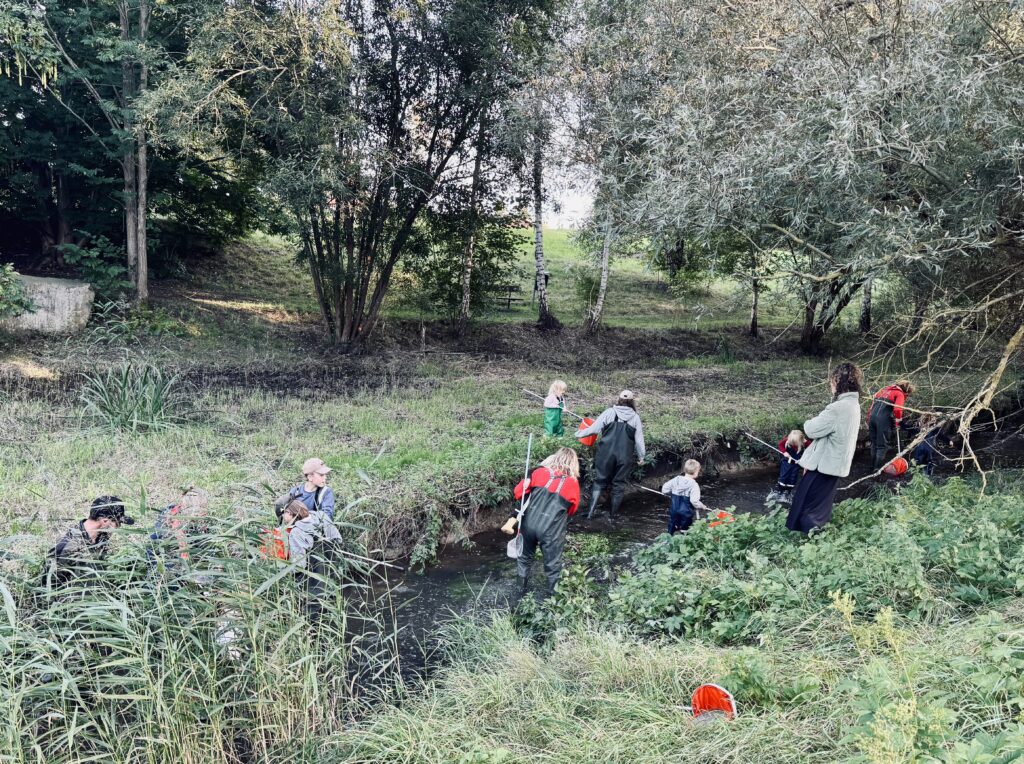
One activity in the event was electrofishing.
-
During the design phase of a public space and stormwater renewal project, the municipality built a temporary installation in the square. The Pallet Park was a car-free, greened version of the future space, using pallets, plants, and informal seating. It was open to the public for a full summer season before any permanent construction began.
Local residents, neighbours, and visitors were identified as the key group because the planned changes would significantly alter how people used the space, and understanding their actual reactions before the design was finalised was considered essential.
Feedback from the installation directly shaped the final design: people wanted naturalistic, dense planting rather than formal greenery, open water elements, and informal places to sit. Throughout the construction period that followed, a dedicated neighbourhood contact was available to anyone with questions, and their direct phone number was posted on the site’s information boards. This represents a simple measure that the project team identifies as one of the most effective in maintaining positive community relations throughout a long and disruptive build.
-
Residents were engaged by planting seedlings to flood meadows (3 events in total). The local residents were identified as an important group because the area is important for their recreation. Also, the Wild Zone NGO who organized planting, has a habit of involving citizens in planting work. Citizen engagement is aligned with city strategy and mayoral program and an important part of EU-funded projects. It is also important that the residents feel ownership of the NBS, and participation in community work can give them sense of meaningfulness.
Residents were contacted via calendar event on city’s digital calendar, social media posts and emails to stakeholders through NGOs. Participants gave positive feedpack during the events. People worked actively and with smiling faces. Additionally, it is good to serve some snacks during the events because the work is hard.
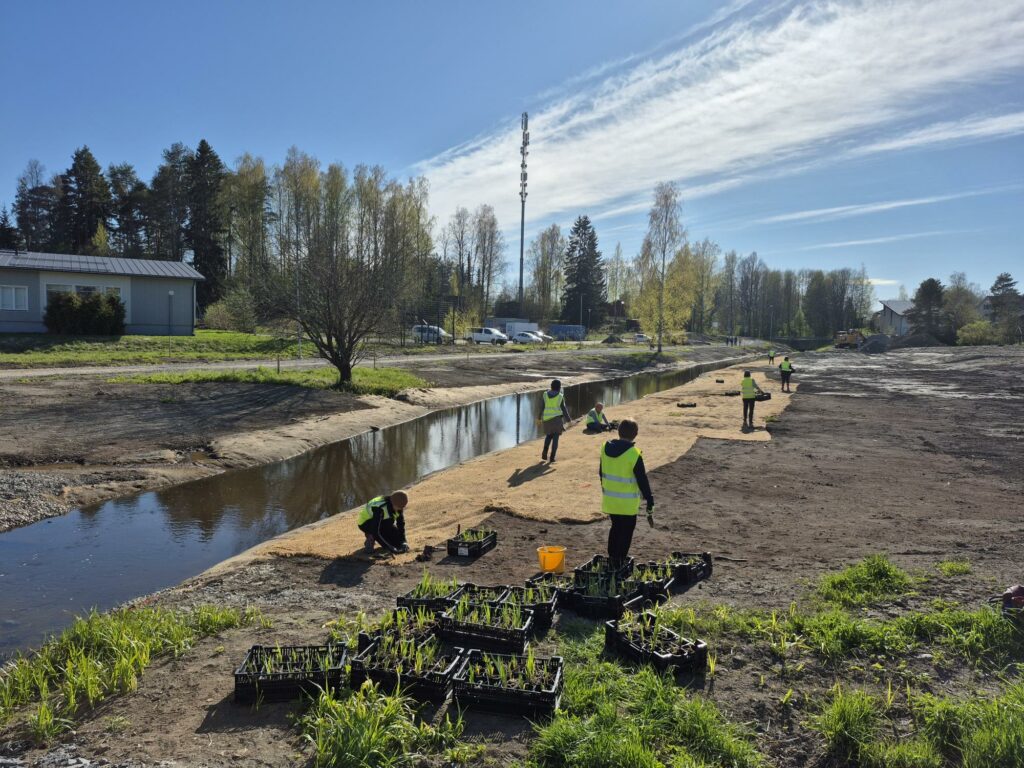
Resident event in Varsanpuisto park, Tampere in spring 2025.
-
Several meetings with a local water company were held to ensure the integration of pipe-based and nature-based solutions. The local water company was identified important because it has strong opinions on integrated stormwater management, and it is crucial to have their involvement and their agreement in the implementation of different solutions. Without their engagement it would not be possible to implement the solution.
The water company had plans to improve the existing stormwater system in the same area. It was crucial to integrate the pipe-based and nature-based solutions with each other. The company was contacted through the city contacts and using personal contacts via e-mail. It is very important to engage different stakeholders in the very early stages so that all parties get an impression that it is their project.
Matching stakeholder engagement to project phases
Effective stakeholder engagement does not follow a single template. What works at the design stage is different from what is needed during construction or long-term maintenance. Therefore, the level of involvement you offer different groups will vary across the project, too.
Practitioners from City Blues and external stakeholders collaborated to develop specific engagement ideas covering the entire project lifecycle and various levels of participation. These ranged from keeping community members informed to active collaboration and shared decision-making.
The outcome is a practical reference: a collection of peer-generated examples you can use to craft your own engagement strategy, tailor it to your local context, and further develop it over time.
Explore the full mapping and the ideas your peers have contributed: Report of Stavanger Workshop’s Methodology.pdf. This report presents a set of stakeholder engagement ideas mapped across the full NBS project lifecycle, developed collaboratively by municipal practitioners from City Blues partner cities. Use it as a starting point for planning engagement in your own projects.