
Main goal
The planning objective is to reduce flood risk by managing stormwater close to where it falls and along its wider flow path. For flood-related NbS, that means capturing frequent rainfall, increasing infiltration where soil and groundwater condition allow it, delaying and attenuating peak runoff, providing temporary storage during larger events and keeping safe overflow and exceedance routes available when design capacity is exceeded. [1]
Typical NBS types
Flood-risk NBS usually work best as a connected management cascade rather than as isolated features. The system types below are widely used in NBS practice since they help to store, infiltrate, slow or safely route runoff across streets, developments and catchments. Depending on local conditions, such as site availability, soil conditions, etc., different NBS types of various sizes and design may be used. [2]
- Swales: Slow runoff and provide shallow conveyance for routine and exceedance flows.
- Rain gardens: Detain and infiltrate runoff from roofs, streets and paved areas close to source.
- Wetlands: Provide large storage and flow buffering.
- Detention basins: Attenuate peak flows and manage temporary storm storage during larger events.
- Green roofs: Retain and delay roof runoff and reduce pressure on downstream drainage.
Monitoring flood risk prevention
The monitoring of flood prevention should answer two linked questions: Is the NBS still delivering runoff reduction and flood attenuation and is it still in a condition that allows that performance to continue? Good practice combines event-based hydraulic checks, routine condition inspections, safety and reliability review and maintenance-response tracking so that observations lead to action rather than sitting in isolated reports or spreadsheets.
-
Functional performance monitoring checks whether the system is still doing its hydrologic job: capturing runoff, using storage, promoting infiltration where intended, delaying peaks and releasing or overflowing water in a controlled way. For flood-related NBS, the most useful evidence is often event-based rather than purely annual, because underperformance is frequently revealed during specific storms, seasons or catchment conditions. Where possible, the observed behaviour should be compared with the design intent or earlier baseline performance. [3]
Practical monitoring approaches: Rainfall and water-level sensors where justified (see article on City Blues’ website); outlet flow measurement on higher-value sites; post-event walkovers after threshold storms; simple hydraulic checks at inlets, outlets and overflow points; periodic infiltration testing for infiltration-focused assets.
Suggested parameters: Runoff reduction by event or season; peak attenuation; peak delay; drawdown time; infiltration or recession rate; storage use; overflow or bypass frequency; downstream nuisance flooding occurrence. [4]
Realistic monitoring frequency: Continuous or event-based where sensors are installed; post-event review after larger storms; seasonal trend review; annual hydraulic or infiltration testing or sooner where visible decline is detected. [3], [4]
Example action triggers: Drawdown is slower than the design assumption; repeated overflow during non-extreme storms; clear reduction in infiltration or storage use; water bypassing intended entry points; repeated complaints of nuisance flooding downstream.
-
Condition and asset health monitoring checks whether the physical state of the asset is undermining hydraulic performance. In flood-risk NBS, many problems become visible before they become hydraulic failures: blocked inlets, surface sealing, erosion, damaged edges, buried pretreatment zones, dead vegetation, invasive growth or standing water where the system should already have drained down. [5], [6]
Practical monitoring approaches: Routine inspections (see inspection list at Learn more); checklist walks; fixed photo points; sediment-depth checks in pretreatment or basin areas; vegetation-condition scoring; simple chamber or outlet checks.
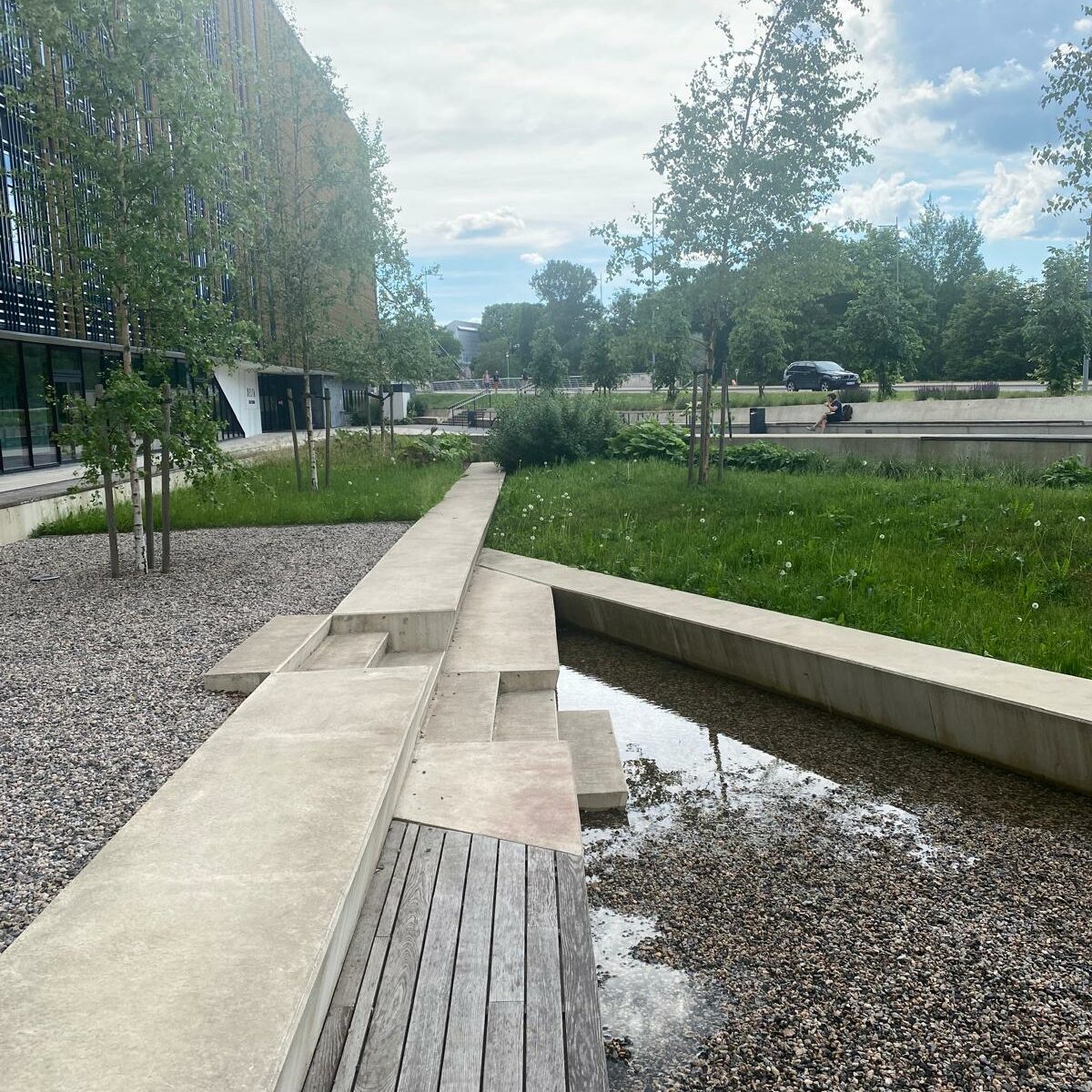
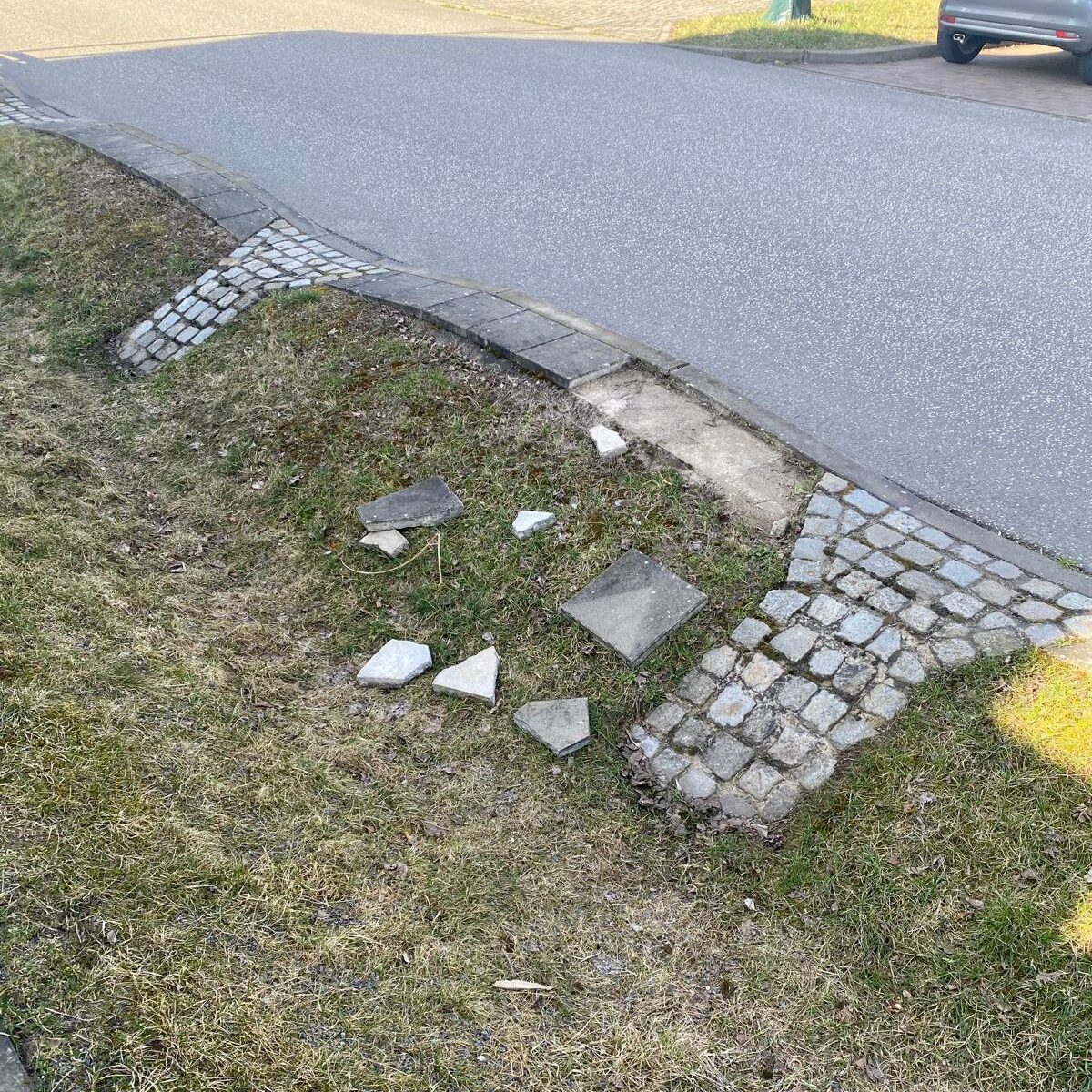
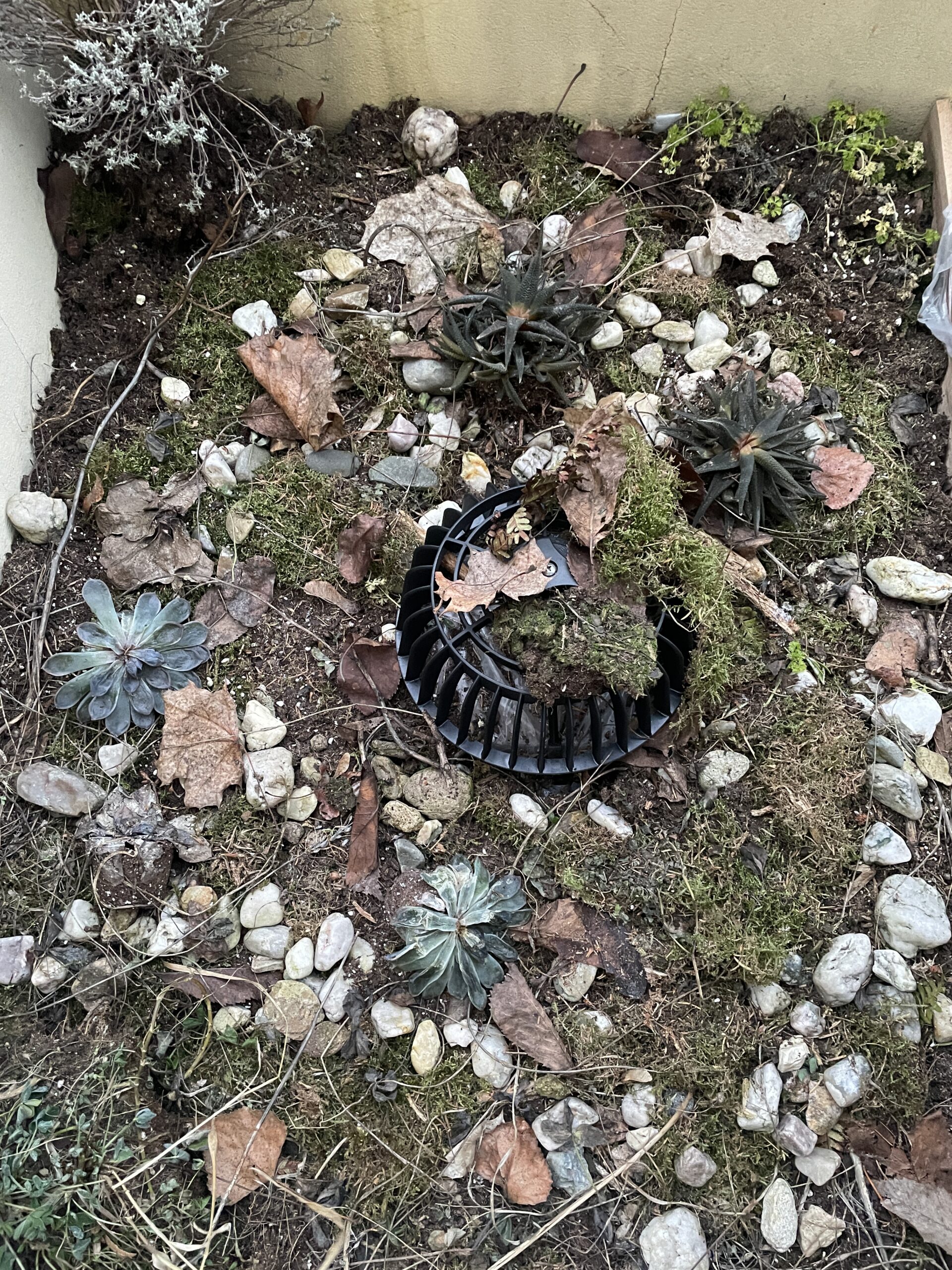
Suggested proxies: Sediment accumulation; blockage and clogging; erosion; vegetation cover; bare patches; litter; structural damage; standing water between storms (see Figure 1) .
Realistic monitoring frequency: Monthly during establishment or for high-risk or high-debris sites; quarterly as a practical baseline thereafter; after major storms; annual detailed condition review.
Example action triggers: Blocked inlet or outlet; heavy silt deposition; visible erosion; dead or invasive vegetation; exposed media or geotextile; prolonged ponding; damaged edging, grilles, chambers or banks.
-
Maintenance needs and response monitoring turns inspection findings into asset management. It tracks what action is needed, whether it has been assigned, how quickly it is being completed and whether the same defect keeps returning. For individual assets this helps prevent repeated decline; for larger portfolios it highlights backlog, recurring weak points and resourcing gaps that can quietly erode flood performance over time. [7], [8]
Practical maintenance reporting options: Maintenance logs; work orders; inspection-to-action checklists; contractor close-out records; simple KPI dashboards; quarterly review of repeat issues and overdue actions.
Suggested parameters: Open issues; repeat defects; maintenance response time; inspection backlog; overdue tasks; vegetation replacement need; recurrence after repair.
Realistic monitoring frequency: Ongoing logging; monthly operational review; quarterly backlog and trend review; annual lessons-learned summary.
Example action triggers: Rising backlog; missed critical tasks; the same issue recurring repeatedly; unresolved high-risk defects; measurable performance loss that is clearly linked to delayed maintenance.
-
Different monitoring questions need different methods. The most reliable programmes combine sensor data, routine inspections, targeted field tests, basic analysis and feedback from operators or site users. [3]
Automated
Automated monitoring uses sensors and telemetry to record rainfall, water level, flow, soil moisture, drawdown time or overflow activation. It is best for event behavior, peak attenuation, storage use and reliability checks that would be missed by occasional site visits.
Strengths: High temporal resolution; consistent event capture; useful for alarms and trend analysis.
Limitations: Higher cost, calibration drift, power or communications failure and the need for data quality assurance/quality check.
Inspection-based
Inspection-based monitoring relies on structured visual checks, walkovers and photo records. It is best for blockage, vegetation condition, erosion, sediment accumulation, damage, litter and the general question of whether the asset still looks operationally healthy.
Strengths: Low cost; fast to deploy; direct field judgement by operators or caretakers.
Limitations: Can be subjective and may miss short-lived storm behaviour between visits.
Field testing
Field testing includes infiltration or permeability tests, media or soil checks, sediment-depth checks, drain tests and targeted diagnostics after underperformance is suspected. It is best for confirming whether a system has clogged, compacted, sealed or otherwise drifted from design condition.
Strengths: High diagnostic value and useful for confirming whether maintenance or rehabilitation is actually needed.
Limitations: Labour-intensive and usually provides only a snapshot in time.
User / operator feedback
User and operator feedback captures complaints, caretaker notes, maintenance-crew observations and recurring field issues that sensors often miss. It is best for nuisance flooding, blocked inlets, messy overflow behavior, safety concerns and repeat defects at public-facing assets.
Strengths: Fast local intelligence and a useful way to surface problems between formal inspections.
Limitations: Can be inconsistent and still needs verification in the field.
Typical use cases in flood-risk NBS: Street rain gardens, public squares, school sites, green roofs on occupied buildings and portfolio-level issue tracking.
Maintenance actions for flood risk management
-
Establishment-phase maintenance
During the establishment phase, the priority is to secure vegetation, stabilize the asset and correct early defects before they become recurring failures. Typical actions include watering, early weed control, replacement planting, mulch or surface stabilization, checking settlement, confirming that runoff enters and exits in the intended way and clearing inlets, drains and overflow points. This is the period when many later performance problems begin, especially if vegetation fails to root well or runoff starts short-circuiting the intended flow path. [8]
Routine maintenance
Routine maintenance keeps the day-to-day hydraulic pathway open and the site presentable and safe. Typical actions include removing litter and debris, cleaning inlets and outlets, light sediment removal at entry points or forebays, vegetation care, weed control, mowing or pruning where appropriate and inspection of overflow structures. For street-scale systems, routine work should also check for blocked kerb cuts, nuisance ponding and complaints from nearby users or residents.
Periodic maintenance
Periodic maintenance addresses decline that routine visits cannot solve. Actions may include deeper sediment removal, media rehabilitation or replacement, vegetation renewal, erosion repair, regrading, restorative cleaning of permeable pavements, wetland or basin desilting and repairs to control chambers, outlets, headwalls or drains. These tasks are usually scheduled at longer intervals or triggered by inspections that show loss of storage, infiltration or structural integrity.
Event-caused maintenance
Event-caused maintenance is the post-storm response needed after intense rainfall, overflow, blockage or a safety incident. It includes emergency clearance of blocked inlets or outlets, debris and contaminated sediment removal, scour repair, inspection of damaged structures, temporary safety measures and documenting whether overflow routes and exceedance pathways functioned as intended. Where the same storm-related failure happens repeatedly, the response should move beyond clean-up to hydraulic review or targeted redesign.
-
The table below converts common field observations into practical decision rules for swales, rain gardens, detention basins, wetlands and green roofs. [5], [6], [9]
Observation Likely issue Required action Urgency Water remains ponded longer than the design drawdown period in a rain garden or infiltration area Clogging, compaction, sealed surface or blocked outlet Inspect inlet and outlet first, then test infiltration and rehabilitate media or pretreatment if needed. High Inlet to swale or rain garden is blocked by litter, leaves or sediment Runoff bypassing asset or reduced capture Clear blockage immediately, check upstream source of debris and re-inspect after the next storm. High Repeated overflow occurs in moderate storms at a detention basin or rain garden Lost storage, blocked outlet or under-capacity or operation problem Inspect hydraulic controls, compare with event data and escalate to design review if the pattern continues. High Green roof drain is blocked or ponding occurs outside very large storm events Drain blockage, media migration or outlet restriction Clear drain, inspect filter or drainage layer and repair edge or drain details if necessary. High Green roof vegetation cover is declining or patchy during the growing season Establishment failure, drought stress, nutrient deficiency or weed pressure Diagnose cause, replant, adjust watering or growing-medium management and monitor recovery. Medium Wetland or basin shows heavy litter, algal nuisance or invasive vegetation spread Maintenance backlog or ecological imbalance affecting function Remove litter and invasives, review mowing or vegetation management and inspect hydraulic performance. Medium
Learn more
-
- City of Topeka, ‘Native Vegetated Swale Inspection Form’, City of Topeka, Report. [Online].
- Northeast Ohio Stormwater Training Council, ‘Green Roof Inspection and Maintenance Checklist’, Chagrin River Watershed Partners, Inc., Report, Dec. 2015. [Online].
- North Carolina Department of Environmental Quality, ‘Draft Wetland O&M Inspection Form’, North Carolina Department of Environmental Quality, Report, Mar. 2021. [Online].
-
- UNaLab-project, 2019. D3.1 NBS Performance and Impact Monitoring Report.
- City Blues project. 2025. Innovative monitoring approaches for nature-based solutions.
- European Commission: Directorate-General for Research and Innovation, 2021. Evaluating the impact of nature-based solutions – Appendix of methods. Publications Office of the European Union. doi: 10.2777/11361.
References
[1] C. S. S. Ferreira, K. Potočki, M. Kapović-Solomun, and Z. Kalantari, ‘Nature-Based Solutions for Flood Mitigation and Resilience in Urban Areas’, in Nature-Based Solutions for Flood Mitigation: Environmental and Socio-Economic Aspects, C. S. S. Ferreira, Z. Kalantari, T. Hartmann, and P. Pereira, Eds, Cham: Springer International Publishing, 2022, pp. 59–78. doi: 10.1007/698_2021_758.
[2] M. Winker, A. Matzinger, J. Anterola, F. Frick-Trzebitzky, J. Pillen, and E. Schramm, ‘Infokarten für die Planung blau-grün-grauer Infrastrukturen’, Forschungsverbund netWORKS, Frankfurt am Main, 2022.
[3] J.-L. Bertrand-Krajewski, F. Clemens-Meyer, and M. Lepot, Eds, Metrology in Urban Drainage and Stormwater Management: Plug and Pray. IWA Publishing, 2021. doi: 10.2166/9781789060119.
[4] European Commission: Directorate-General for Research and Innovation, Evaluating the impact of nature-based solutions – A handbook for practitioners. Publications Office of the European Union, 2021. doi: 10.2777/244577.
[5] K. Kaur et al., ‘Failure modes across the life cycle of nature-based stormwater solutions: a systematic review of planning, design, and maintenance challenges’, Blue-Green Systems, vol. 7, no. 2, pp. 444–467, Oct. 2025, doi: 10.2166/bgs.2025.122.
[6] M. Bahrami, B. Roghani, F. Tscheikner-Gratl, and M. M. Rokstad, ‘A deep dive into green infrastructure failures using fault tree analysis’, Water Research, vol. 257, 2024, doi: 10.1016/j.watres.2024.121676.
[7] J. G. Langeveld et al., ‘Asset management for blue-green infrastructures: a scoping review’, Blue-Green Systems, vol. 4, no. 2, pp. 272–290, Nov. 2022, doi: 10.2166/bgs.2022.019.
[8] United States Environmental Protection Agency, ‘Green Infrastructure Installation, Operation, and Maintenance’. United States Environmental Protection Agency, 2025. Accessed: Apr. 15, 2026. [Online]. Available: https://www.epa.gov/green-infrastructure/green-infrastructure-installation-operation-and-maintenance
[9] O. Almasalmeh, B. Roghani, M. Bahrami, E. Girot, Z. Kapelan, and J. Langeveld, ‘Failure mechanisms in blue-green infrastructure: permeable pavements, bioswales and retention ponds in the Netherlands’, Blue-Green Systems, vol. 8, pp. 41–60, Feb. 2026, doi: 10.2166/bgs.2026.045.