
We’re still building this page brick by brick. Stay tuned for the grand reveal!
Stakeholder mapping
There are several different stakeholder groups that can have interest and influence in NBS. What groups are identified important depend on the context, but usually, for instance, local residents, companys, associations and house owners, municipality units/personnel, construction companys, NGOs and media can be important.
Stakeholder engagement case examples
What are some concrete examples how cities can engage stakeholders in implementing NBS?
-
Local residents, houseowners associations, developers and NGOs were involved in stream restoration by distributing stones, gravel and dead wood to create habitats for fish and invertebrates. These stakeholders were identified important because they had shown interest in the specific area.
The reason to engage them was to create ownership of the NBS and educate local people to understand the challenges and the solutions provided. Contact was made through local houseowners associations, social media posts and posters in local supermarkets and community houses etc.
-
City of Malmö invited citizens to an activity by the stream together with two NGOs. This stakeholder group was identified important in a stakeholder analysis, and feedback from the citizens was needed as an input in a feasibility study phase.
Engaging the citizens was important to know how the residents perceive the stream and to know what is appreciated and contributes to their wellbeing. This way their views can be included in future developments. They were contacted via an invitation in the municipality digital calender, posts on the municipality’s official Facebook and Instagram accounts and physical posters in the area. Participating NGOs also reached out through their different networks e.g. membership newsletter.
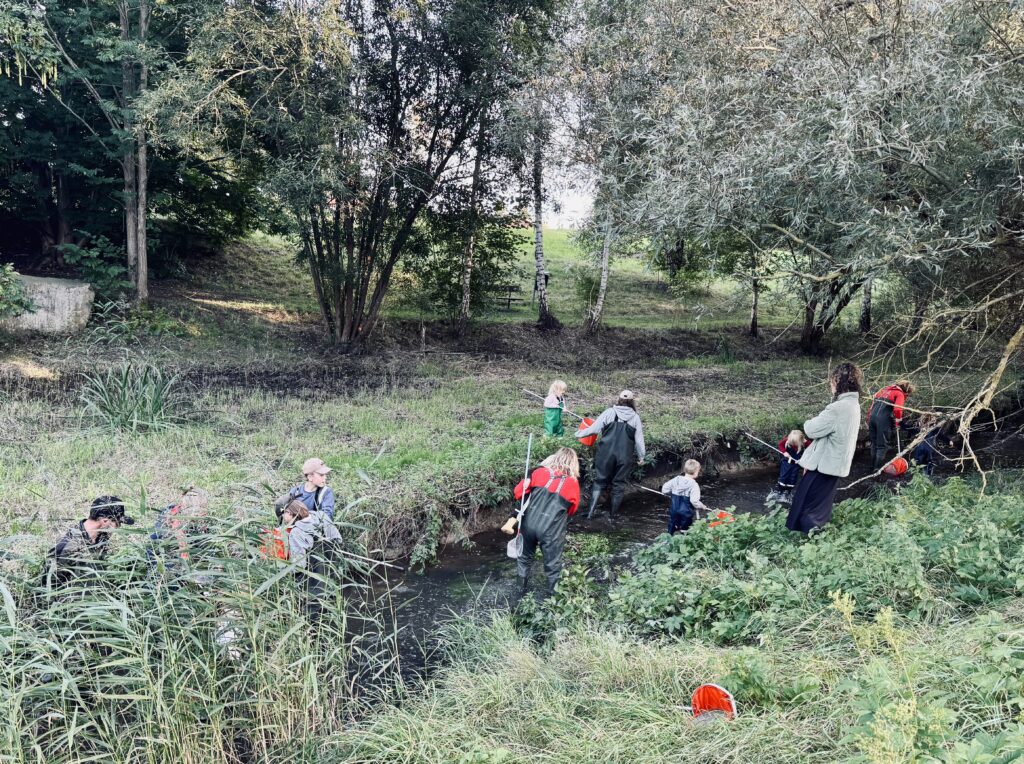
One activity in the event was electrofishing.
-
Residents were engaged by planting seedlings to flood meadows (3 events in total). The local residents were identified as an important group because the area is important for their recreation. Also, the Wild Zone NGO who organized planting, has a habit of involving citizens in planting work. Citizen engagement is aligned with city strategy and mayoral program and an important part of EU-funded projects. It is also important that the residents feel ownership of the NBS, and participation in community work can give them sense of meaningfulness.
Residents were contacted via calendar event on city’s digital calendar, social media posts and emails to stakeholders through NGOs. Participants gave positive feedpack during the events. People worked actively and with smiling faces. Additionally, it is good to serve some snacks during the events because the work is hard.
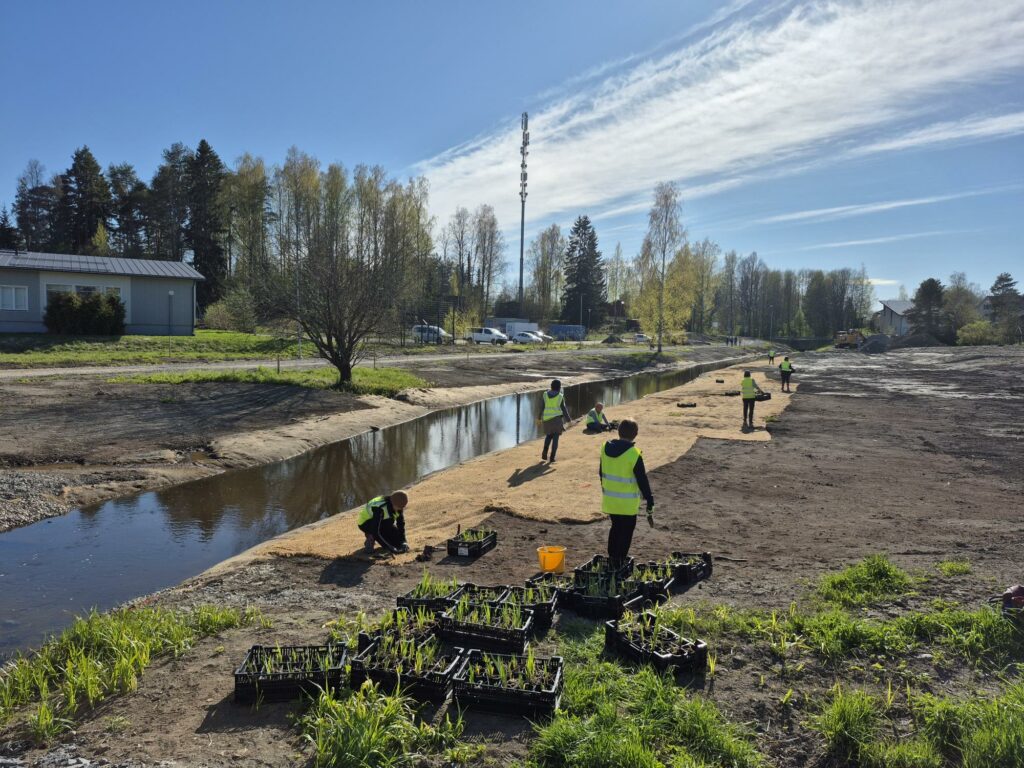
Resident event in Varsanpuisto park, Tampere in spring 2025.
-
Several meetings with a local water company were held to ensure the integration of pipe-based and nature-based solutions. The local water company was identified important because it has strong opinions on integrated storm water management, and it is crucial to have their involvement and their agreement in the implementation of different solutions. Without their engagement it would not be possible to implement the solution.
The water company had plans to improve the existing stormwater system in the same area. It was crucial to integrate the pipe-based and nature-based solutions with each other. The company was contacted through the city contacts and using personal contacts via e-mail. It is very important to engage different stakeholders in the very early stages so that all parties get an impression that it is their project.