
Designing
Operational models in designing NBS to learn from
-
Aarhus has developed several thematic design guidelines, among others:
-
The Technical Handbook of Malmö includes a set of type drawings for a variety of NBS (available also Computer Aided Design (CAD/.dwg) formats. As a significant resource the handbook clearly outlines the complex system of roles and responsibilities of different stakeholders and municipal authorities across the project cycle. The guidance provided in the technical handbook is integrated to the regulatory frameworks and institutionalized processes of the city. The handbook interlinks to Swedish AMA guidance (standardized technical specifications for construction) and VGU (standardized technical specification for road and street construction).
-
Tampere is currently preparing a Design guideline for nature-based solutions. This guidance will include decision support for selecting an appropriate solution that consider different boundary conditions and characteristics of the site. The different aspects that are considered in decision making are a) Groundwater levels; b) Soil conditions; c) Space requirements; d) Stormwater quality outcomes and e) Catchment size.
In addition to this, the design guideline will include info-charts about the different archetypical NBS solutions. Guidelines covers the following topics: 1) Utilization of stormwater; 2) Infiltration; 3) Biofiltration; 4) Underground systems; 5) Storage systems; 6) Wetlands; 7) Swales/ditches.
-
Stavanger develops a guideline, named Climate and Environmental Plan 2018-2030. This guideline offers a strategic plan to address climate change and improve the city’s sustainability. The ambition is to make Stavanger a green, climate-friendly and climate-robust city. The plan aims to protect and conserve areas of natural importance and ensuring the viability of biodiversity in urban areas. The Climate and Environmental Plan for Stavanger also includes a set of strategies for stormwater management.
Building blue-green infrastructure for stormwater management is also included in the plan. This strategic plan is the first legal document of Stavanger Municipality that introduced NBS as part of local climate and environmental plan.
Different solutions
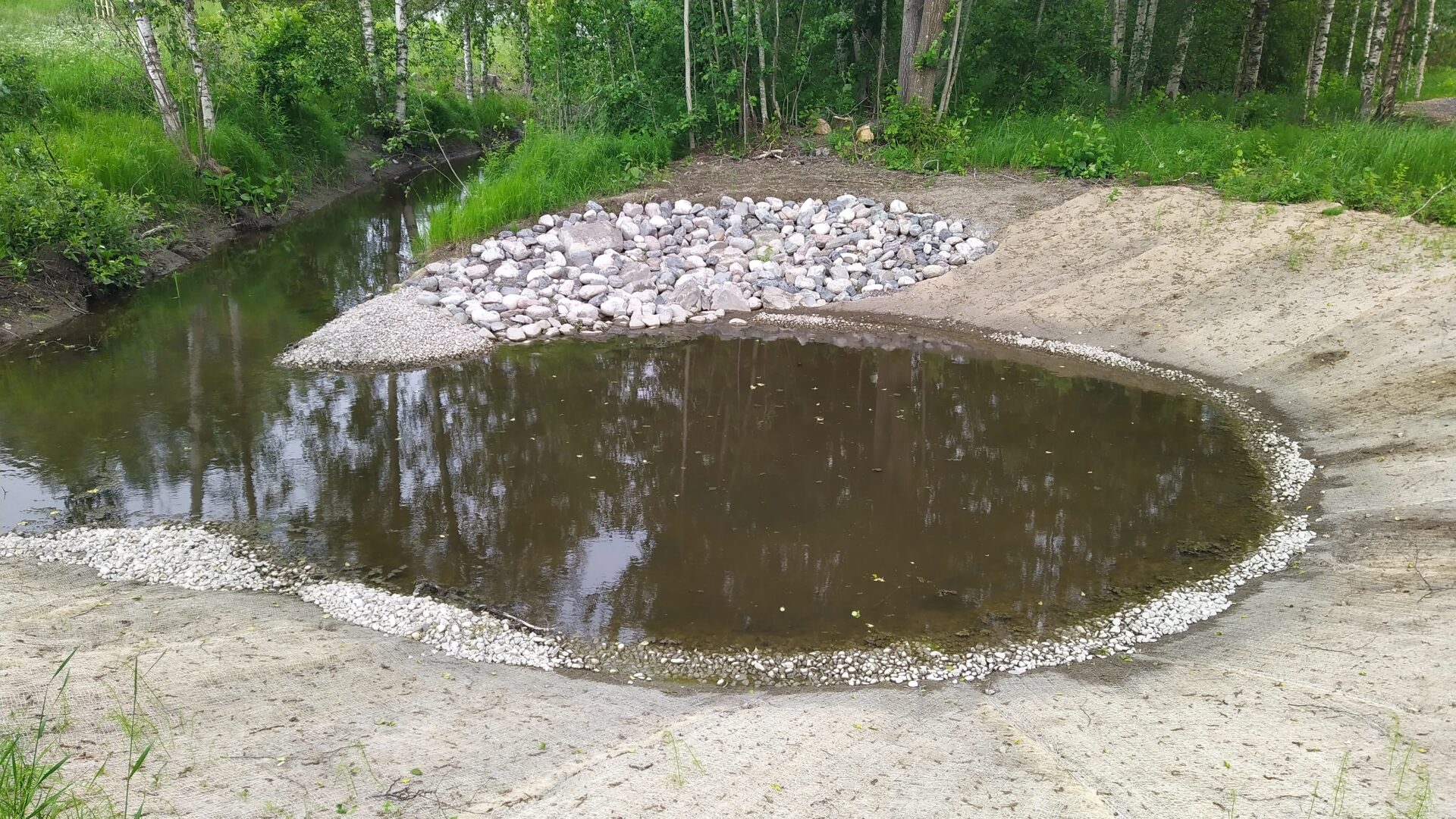
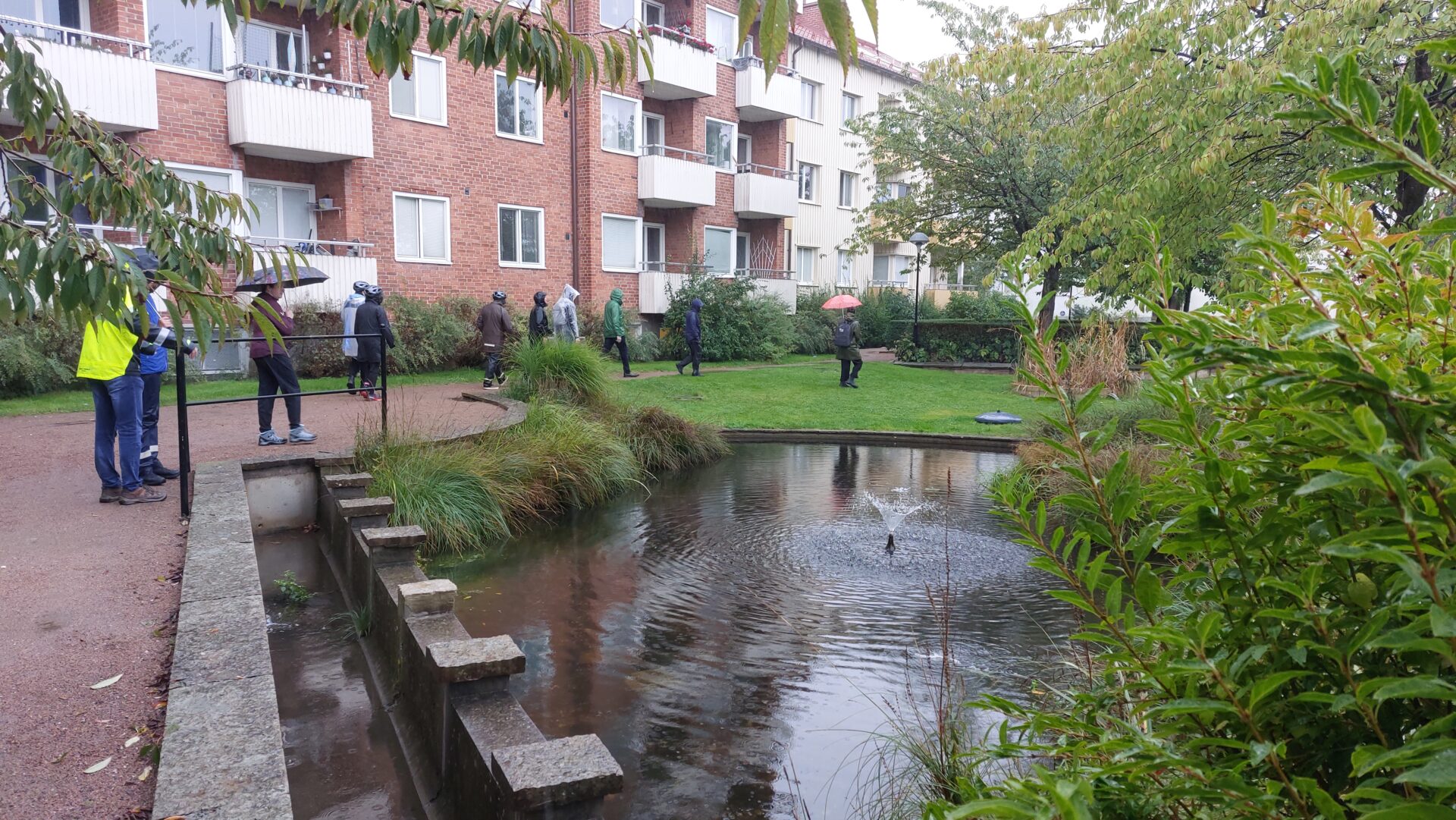
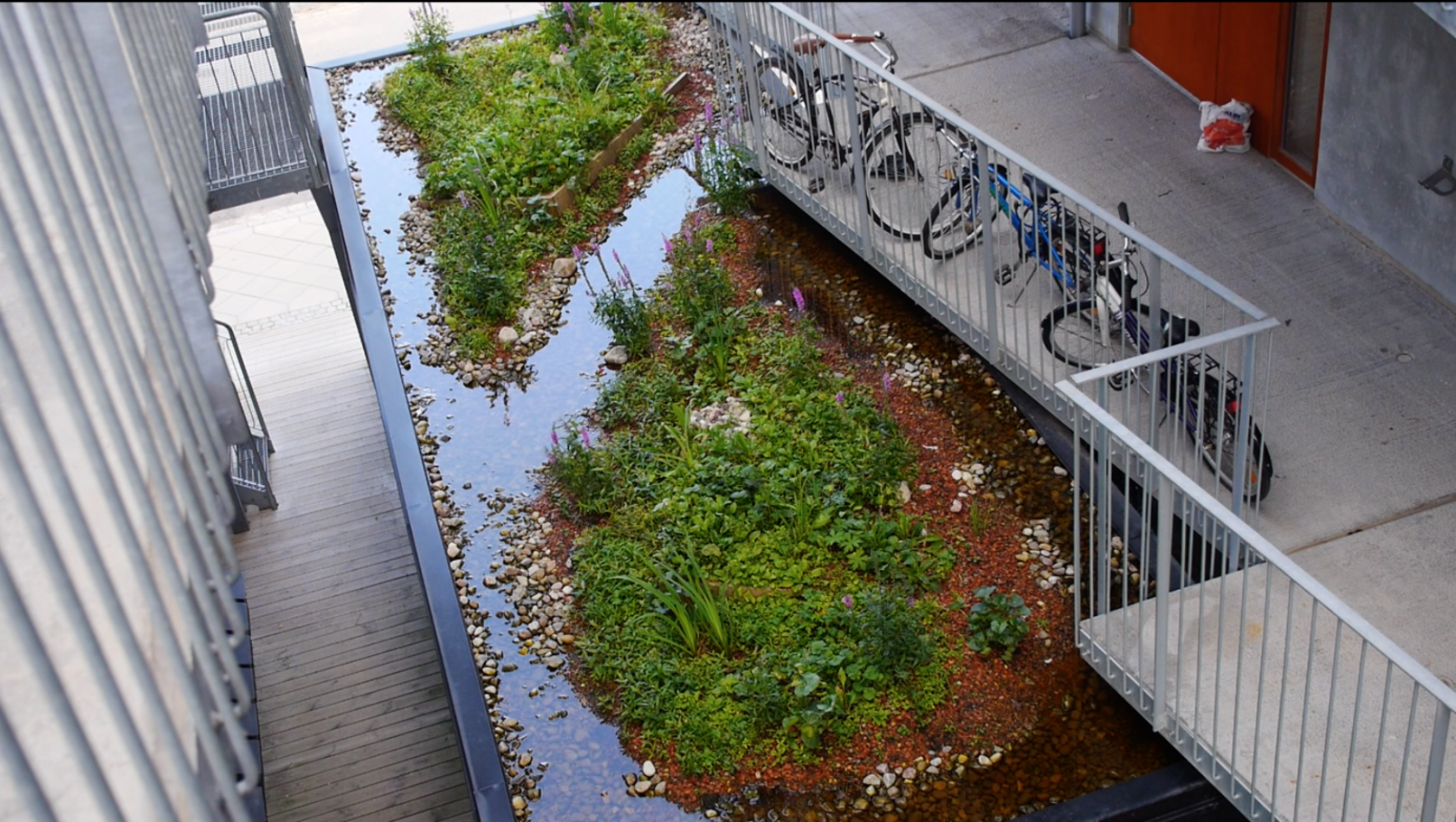
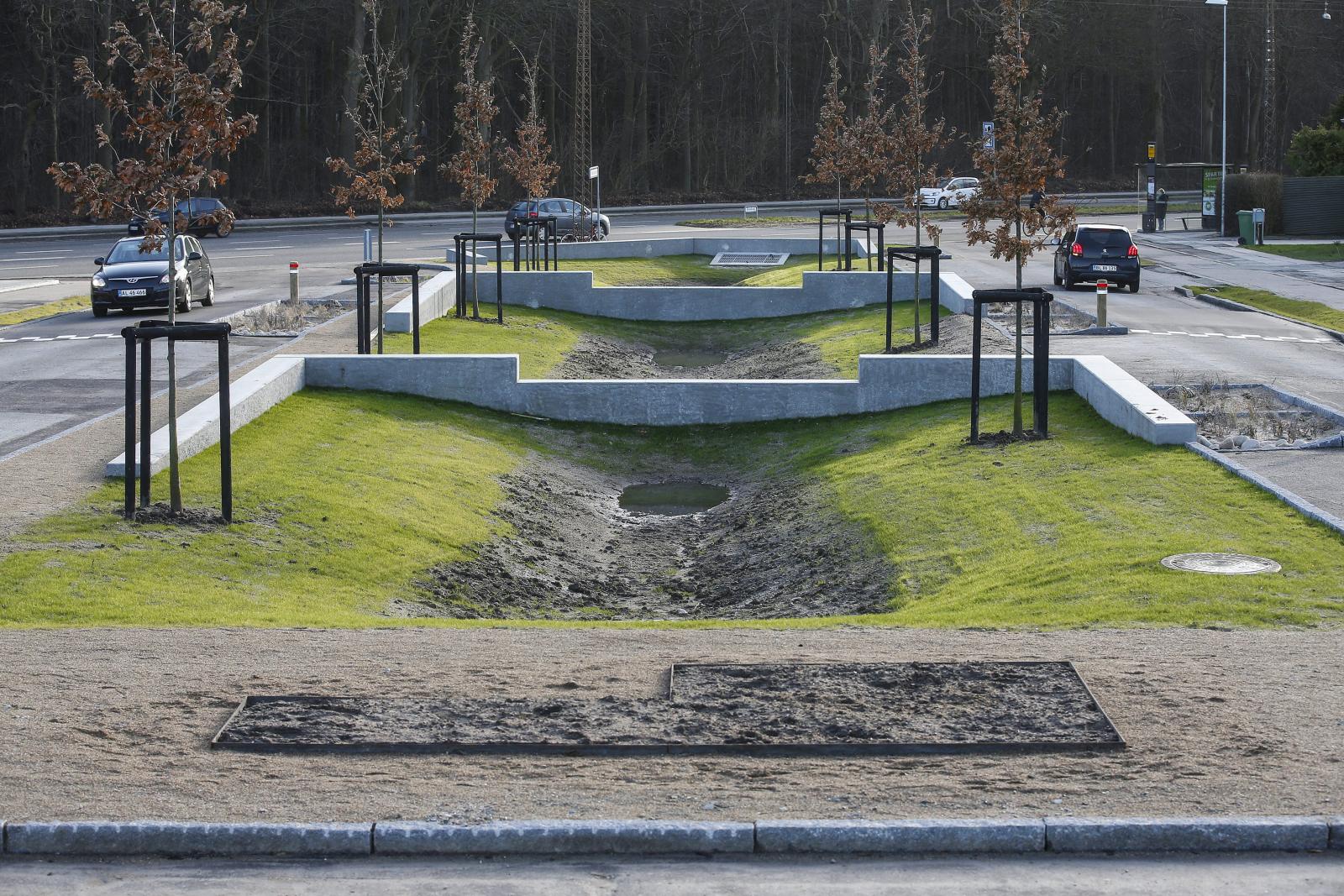
Take a look what nature-based solutions look like in different cities. Click the images to see more details.
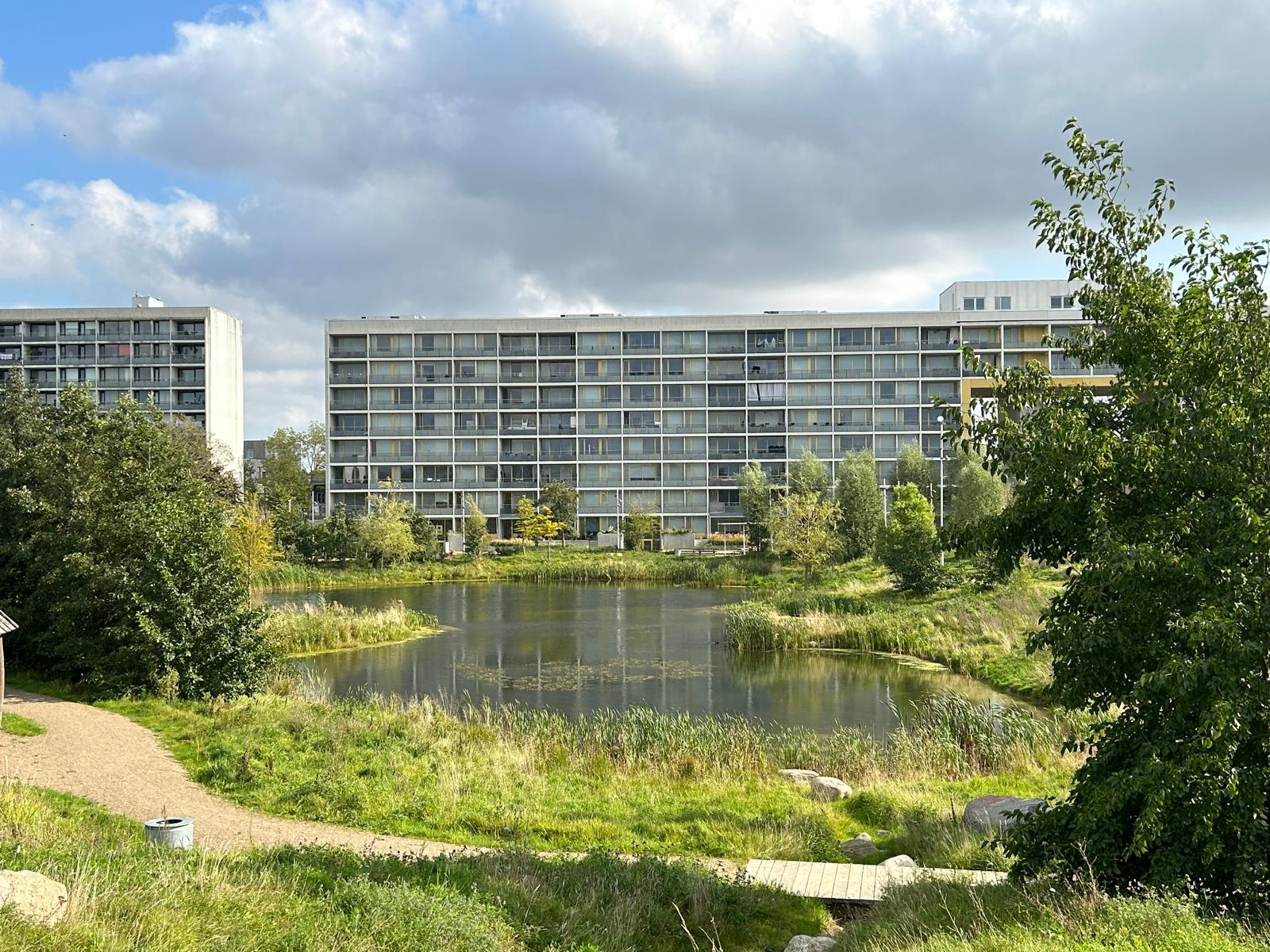

Establish a rain garden
A guide developed by City of Tampere, UNaLab project and Ramboll. The guide is developed for private properties in Tampere, but can be useful for stormwater management in different municipalities, too.
-
A rain garden is a visually attractive planted area in a yard through which stormwater from the property is directed, for example rainwater collected from roofs and other impermeable surfaces.
A rain garden is a flower bed that requires very little irrigation. It retains a large share of stormwater and the harmful substances carried with it, thereby reducing the load on water bodies.
Plants in the rain garden evaporate part of the incoming water back into the natural cycle, making the rain garden a nature‑based solution for stormwater management. Stormwater detention requirements on a property can be met fully or partially by calculating the ponding volume.
-
Stormwater retention
Rain gardens mitigate challenges related to stormwater conveyance and infiltration by collecting, utilizing and infiltrating stormwater, thereby reducing the load on the stormwater network.
Environmental friendliness
Plants bind impurities present in stormwater that would otherwise be transported via the stormwater system into water bodies.
Low maintenance
The garden requires very little watering, as it stores and recirculates stormwater. However, the first watering in spring is important. Do not fertilize, as one purpose is to purify stormwater. Weeding is generally unnecessary, as rain garden plantings are meadow‑like and grow densely. Plant selection should be based on site conditions to ensure easy maintenance.
Visual appeal
Plants are selected so that greenery remains into autumn and flowering occurs throughout the growing season.
Supporting biodiversity
Native flowering plants support pollinators such as bumblebees, bees and butterflies.
-
When planning a rain garden, check the local zoning plan and building guidelines for applicable requirements. Building control supervises compliance with stormwater detention volumes during construction.
In housing companies, discuss the project with the property manager and shareholders. Consider whether a larger rain garden serving the whole housing company or a specific area could be implemented.
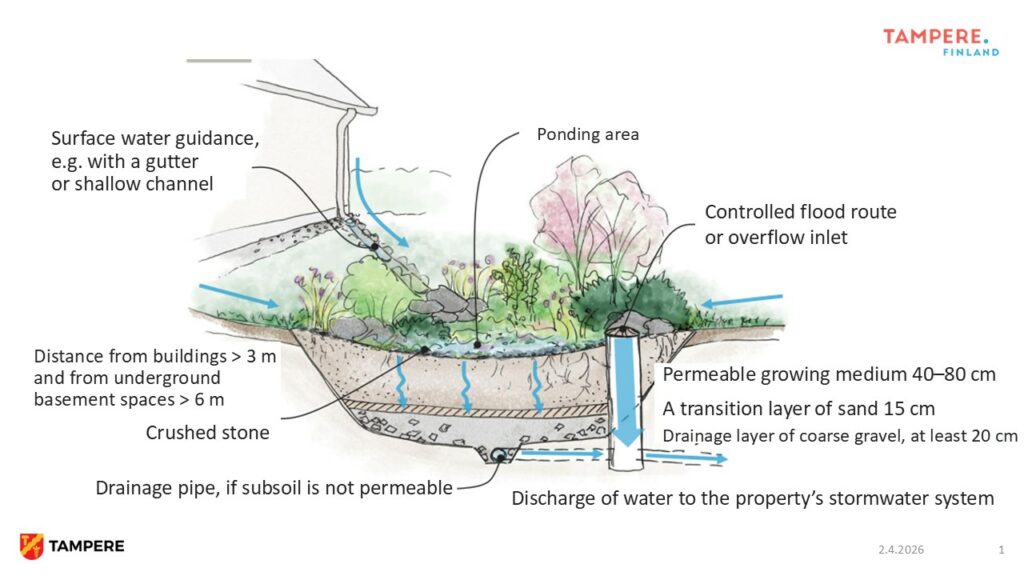
A rain garden must not be placed directly next to a building. Minimum distance: 3 m from building walls and 6 m from underground basements. On sloped plots, locate the rain garden downslope. Also consider neighboring buildings.
Rain gardens can fulfill zoning requirements for stormwater management.
They are often considered sufficient for qualitative stormwater treatment if properly sized. Quantitative detention can be handled partially or fully.Example calculation
Zoning requirement: “Stormwater from impermeable surfaces must be detained on site at a volume of 1 m³ per 100 m² of impermeable surface.”
Impermeable area on the plot: 135 m²
→ Required detention volume: 1.35 m³This can be achieved with a rain garden sized e.g. 3 m × 1.5 m × 0.30 m (effective water depth).
-
Stormwater can be directed into a rain garden using channels or vegetated swales. In some cases, underground pipes may be used if sufficient elevation differences exist. Pumping is not recommended.
Stormwater temporarily ponds in the rain garden, which must therefore form a basin‑like depression. For heavy rainfall, a controlled overflow route must lead water safely onward, for example via a grated catch basin with sediment trap connected to the municipal stormwater network.
If the subsoil is not well permeable, drainage pipes must be installed beneath the soil layers to prevent waterlogging.
-
-
Consider light and moisture conditions on the site.
Edges are drier, lower areas wetter. Plan plant height and root space. Aim for flowering throughout the growing season.
Examples of suitable plants
Cardamine amara, Caltha palustris, Filipendula ulmaria, Iris pseudacorus, Lythrum salicaria, Mentha aquatica, Viburnum opulus, Salix caprea, etc.
Pre‑mixed seed mixes for wet areas are also suitable. -
After regulations are checked and permits obtained, construction can begin.
Key points:
- Manage excavated soil and plant waste responsibly. Is it possible to create landscaping features on the site where the excavated soil can be placed, or will you transport the excavated soil to a waste disposal center? Compost the plant waste. Control any harmful invasive species.
- Store materials and plants safely. Keep
escape routes clear. Store seedlings in a shaded area and remember to water them. - Use native and preferably local plants or seeds.
-
Water and weed during the first two years.
Do not use fertilizers or pesticides.
Leave dried plant stems over winter if desired; cut and compost in spring.
Inspect drainage annually via overflow structures.
Ensure inflow channels and pipes remain functional.Enjoy your rain garden!
Common failures in design phase
General causes of failure
- Lack of governance of legal and participatory frameworks
- Lack of standardization and knowledge of techical design
- Fragmentation of engineering standards and guidelines
- Poor communication among different operators and stakeholders
Technical design failures
- Clogging
- Innacurate estimation of flow pathways
- Insufficient design capacity
- Wrong materials and media
- Not considering correctly environmental and operational fluctuations
- Not considering catchment and impact